

Local Adventures
The Killbear Tree: A Georgian Bay Icon Worth the Drive
📅 August 26, 2026 ✍ Hartley Bay Cottages 👁 143 views
A lone, wind-bent white pine on bare granite has become one of Ontario's most recognizable trees — and a quiet conservation story. Here's the history behind it and how to visit.
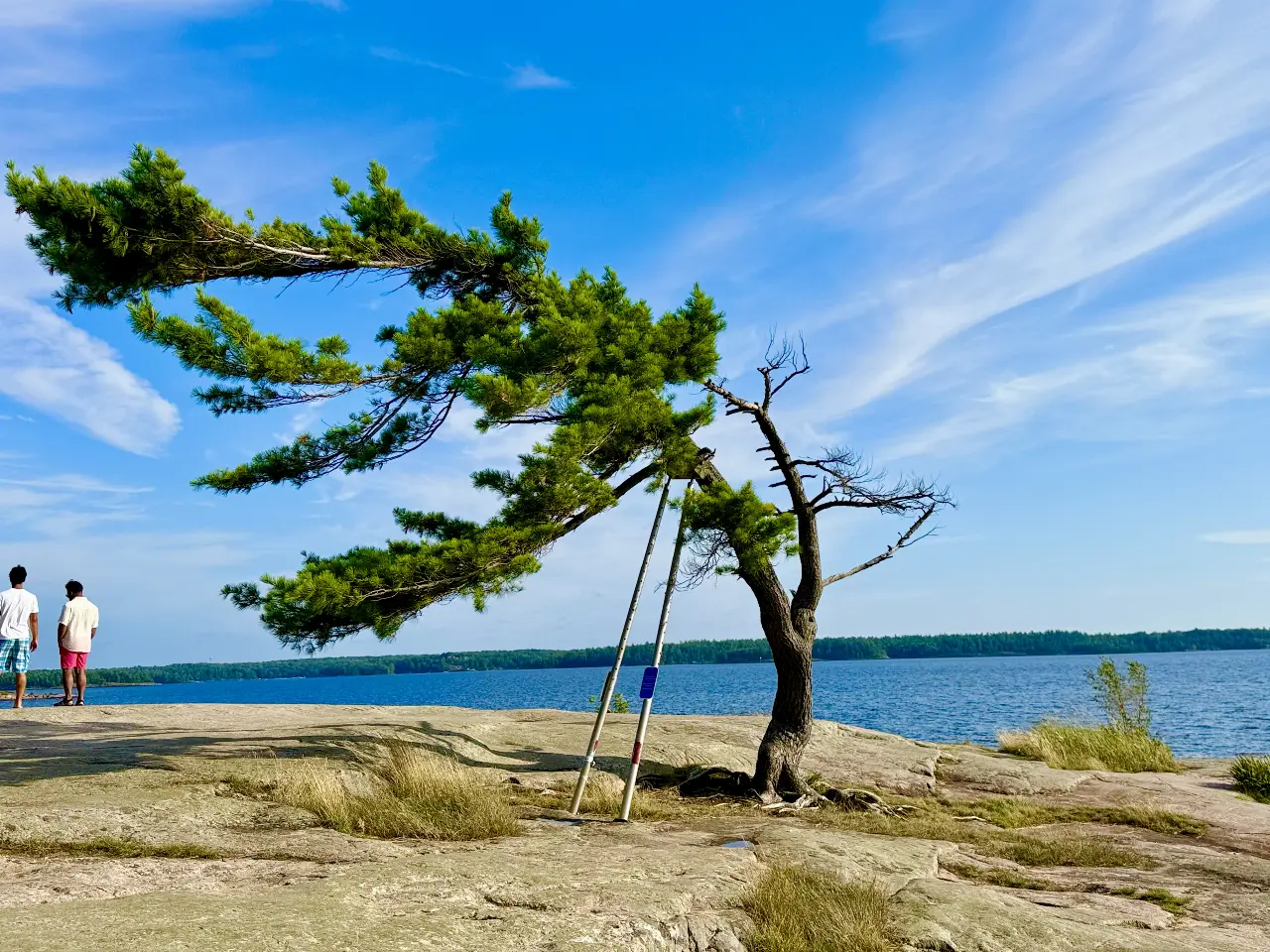
There's a particular pine on Georgian Bay that shows up in more phone camera rolls than almost any other tree in Ontario, long before most visitors ever learn its name. It grows straight out of bare granite, its whole crown swept to one side as if frozen mid-gust, with open water and sky filling in behind it. This is the Killbear Tree, a lone eastern white pine (Pinus strobus) at a viewpoint called Sunset Rocks in Killbear Provincial Park, and it has quietly become one of the most photographed natural landmarks in the province.
Killbear sits on a peninsula pushing out into eastern Georgian Bay, near Nobel and Parry Sound, inside the Georgian Bay Littoral UNESCO Biosphere Reserve. It's the kind of landscape that made this stretch of shoreline famous well before social media existed — smooth Canadian Shield granite, wind-shaped pine, and sand beaches all within the same short walk. White pine is Ontario's official provincial tree, and this particular specimen has become something like the park's unofficial mascot: it appears on postcards, in trip reports, and in more than a few framed prints hanging in nearby cottages.
The tree itself grows almost directly out of rock. It's rooted at Sunset Rocks near the Beaver Dams campground, in a crack in the granite with barely any soil to speak of. Its dramatic lean isn't an accident of framing — it's the result of a century or more of steady westerly wind blowing in off the Thirty Thousand Islands, training the trunk and canopy to grow east over time. Very little else about its setting is dramatic; it's the wind and the rock, working slowly, that gave it its shape.
That exposed, low-value position is likely also why the tree is still standing at all. Killbear Point was heavily logged from roughly the late 1890s into the early 1900s, and most of what looks like old-growth forest in the park today is actually second growth that filled in afterward — you can still find old stumps if you know where to look. A pine growing out of solid rock, with no real soil to speak of, simply wasn't worth the effort to a logging crew. The park itself wasn't established until 1960, well after the tree had already taken its current shape. The point it stands on carries an older name, too: in Anishinaabemowin it's known as Makwa Neyoshing, or Bear Point, and exactly how "Killbear" came into use on English maps isn't entirely settled.
Age and exposure are catching up with it, though. By 2019, park staff had noticed a major limb had died back and the trunk had started to hollow. A serious ice storm in 2022 accelerated the damage, and Ontario Parks responded by installing discreet support braces to keep the lean from becoming a safety issue for the crowds who gather to photograph it. Staff continue to monitor and adjust those braces, and the park's own position is refreshingly honest: the tree may come down on its own someday, or it may eventually need to be removed if it becomes unsafe.
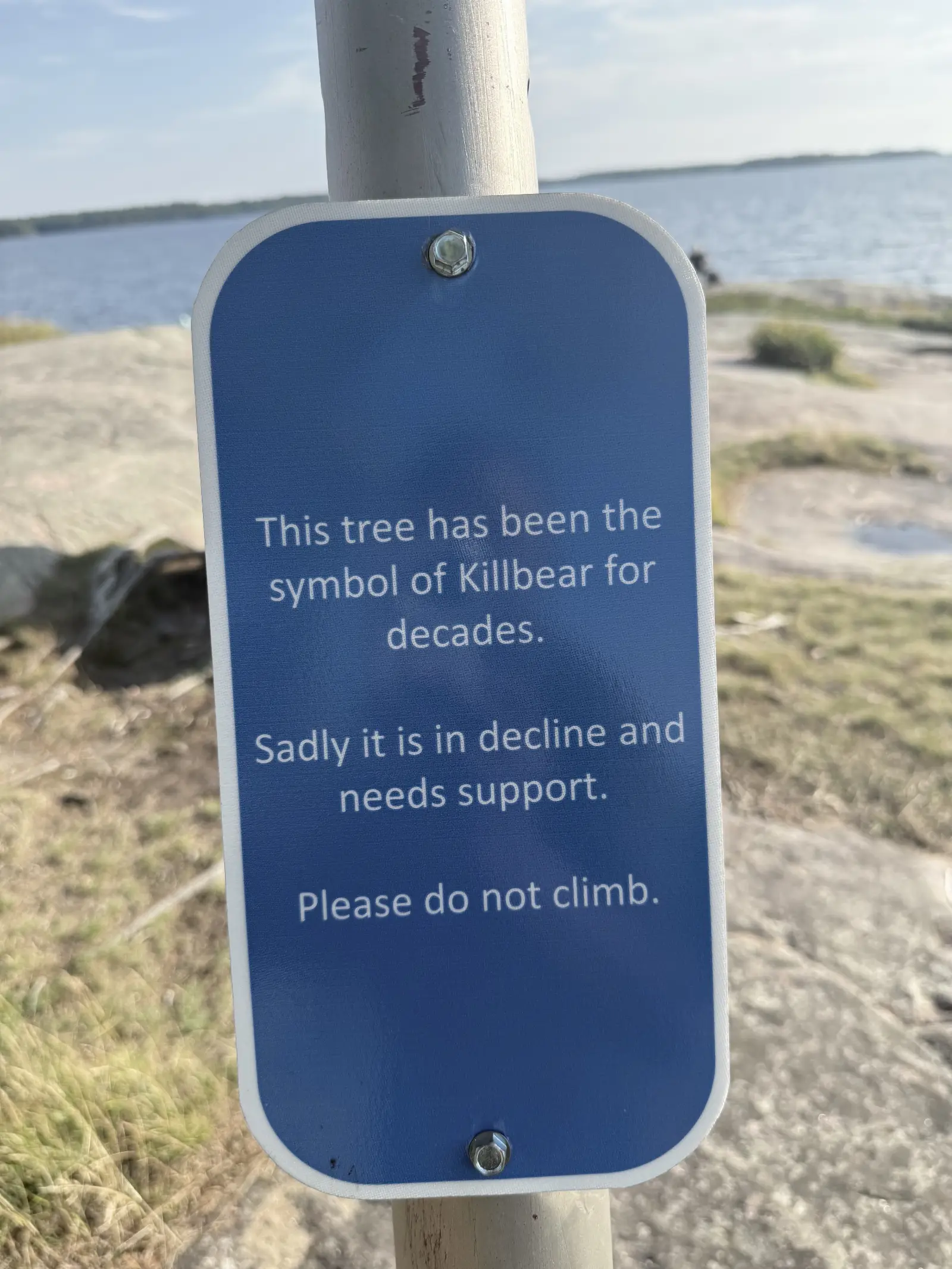
That isn't quite the end of the story, though. The Forest Gene Conservation Association took cutting material from the original tree's crown and grafted it onto young rootstock, meaning the growing tip of each graft carries the same genetics as the Killbear Tree itself. Roughly thirty of these clones were raised at a facility in Kemptville with the intention of eventually replanting them in the park. The exact silhouette everyone recognizes today may not last forever, but the tree's lineage is already secured for the next generation of Georgian Bay shoreline.
If you're staying with us and want to see it in person, it's a worthwhile detour from the immediate Killarney and French River area — figure on roughly a two-hour drive south along Highway 69 through Parry Sound to Nobel. You'll need a valid Ontario Parks permit, whether you're stopping for the day or camping, so it's worth booking or checking availability before you go. Inside the park, follow the signs through the Beaver Dams campground to Sunset Rocks; it's a short walk, but it's entirely over exposed granite, so footwear with real grip is worth having, especially if the rock is at all damp.
Evening is genuinely the best time to see it — the viewpoint is named Sunset Rocks for a reason, and the low light does a lot of work bringing out the lean of the trunk and the colour on the water behind it. Midday tends to be both harsher light and a busier viewpoint. When you're shooting it, try getting slightly below or off to one side so the trunk, the rock shelf, and the open bay all read together in the frame, and consider including some foreground granite for scale. Whether the support braces belong in your shot is a matter of taste, but they're part of the tree's current reality. However you frame it, please don't climb on the tree or lean on the braces, and be mindful of sharing the viewpoint with everyone else waiting for the same photo.
Sunset Rocks is far from the only reason to make the trip. Lookout Point Trail, about 3.5 kilometres, opens onto a wide, uninterrupted view of Georgian Bay, and Lighthouse Point is a shorter loop out to the very tip of the peninsula. The Visitor Centre is worth ducking into as well, particularly if the weather turns, with good context on the park's geology and species at risk. The park stays open for day use and limited winter camping too, if you'd rather see the tree bare against snow and ice — a permit is still required either way.
It's easy to treat the Killbear Tree as just a pretty photo op, but there's a bit more to it than that. It grew up with almost no soil and decades of hard wind, and that same exposure that shaped it into something worth photographing is now the reason it's failing. The braces bought it time, not a cure, and the cloning program is the longer-term answer — keeping its exact genetics alive on that shoreline even after the original trunk eventually comes down. It's worth seeing while it's still standing, and worth treating gently while you're there.
**If you go:** Sunset Rocks, Beaver Dams campground, Killbear Provincial Park — 35 Killbear Park Road, Nobel, Ontario. Eastern white pine, estimated 100+ years old. Braced since 2022, with roughly thirty genetic clones raised for future replanting. An Ontario Parks day-use or camping permit is required. Best light is late afternoon through sunset.
Stay With Us
Explore Our Cottages
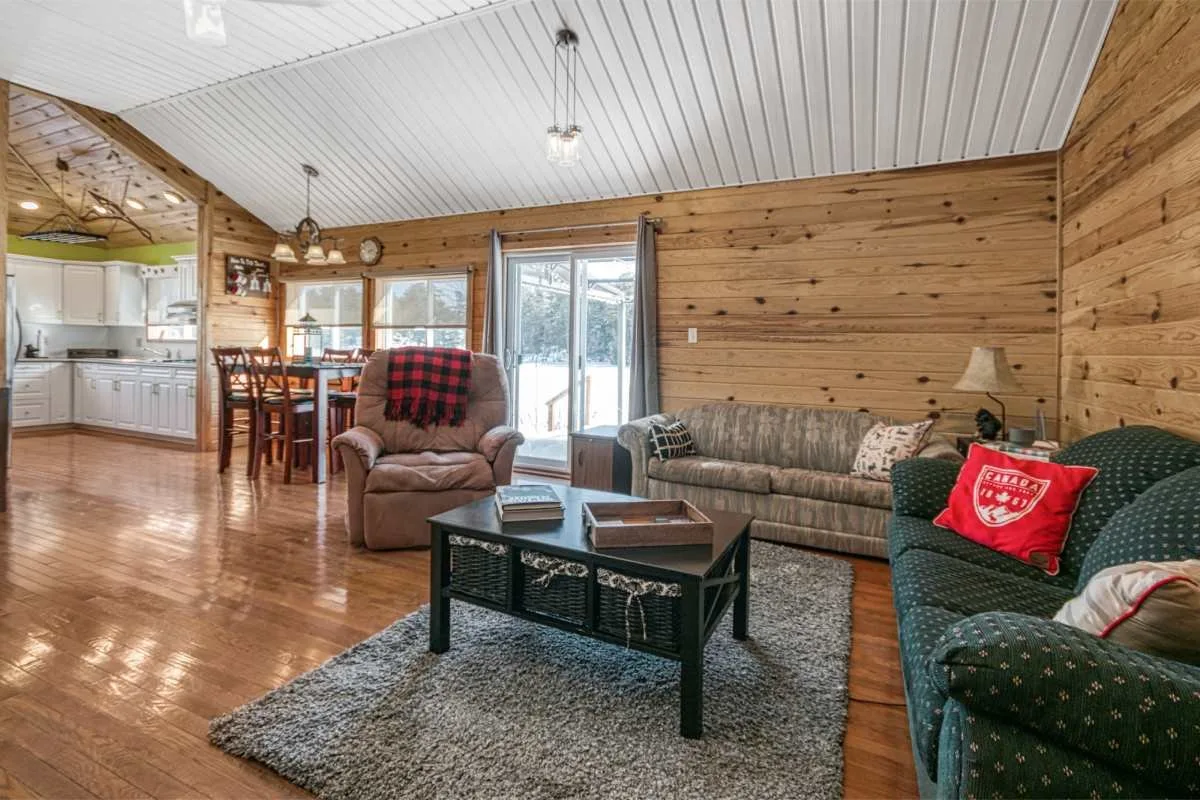
Large | 3 Bedroom Cottage | Sheltered Patio
The Aspen
Sleeps 6 · 2801 Hartley Bay Rd, Killarney Ontario
View Cottage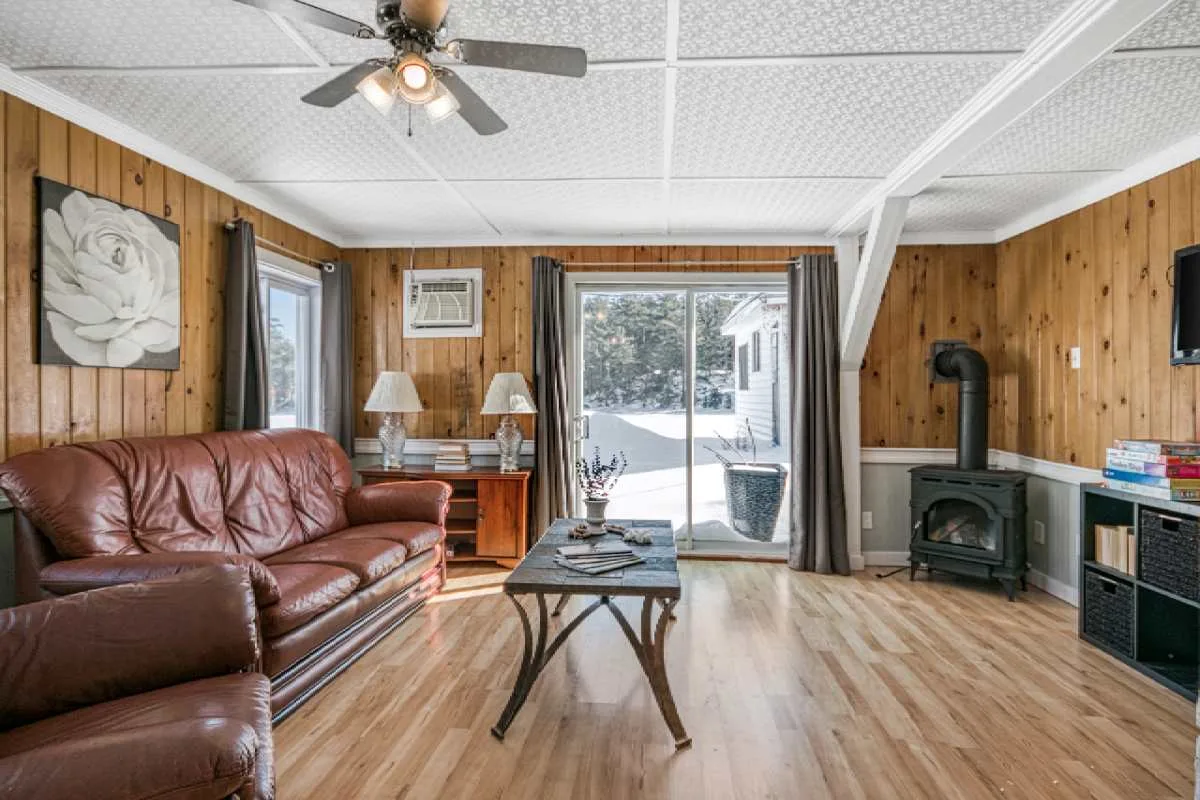
Large | 3 Bedroom Cottage | Gazebo
The Birch
Sleeps 6 · 2801 Hartley Bay Rd, Killarney Ontario
View Cottage
Cozy | 2 Bedroom Cottage | Attached Bunkie
The Cedar
Sleeps 6 · 2801 Hartley Bay Rd, Killarney Ontario
View Cottage